
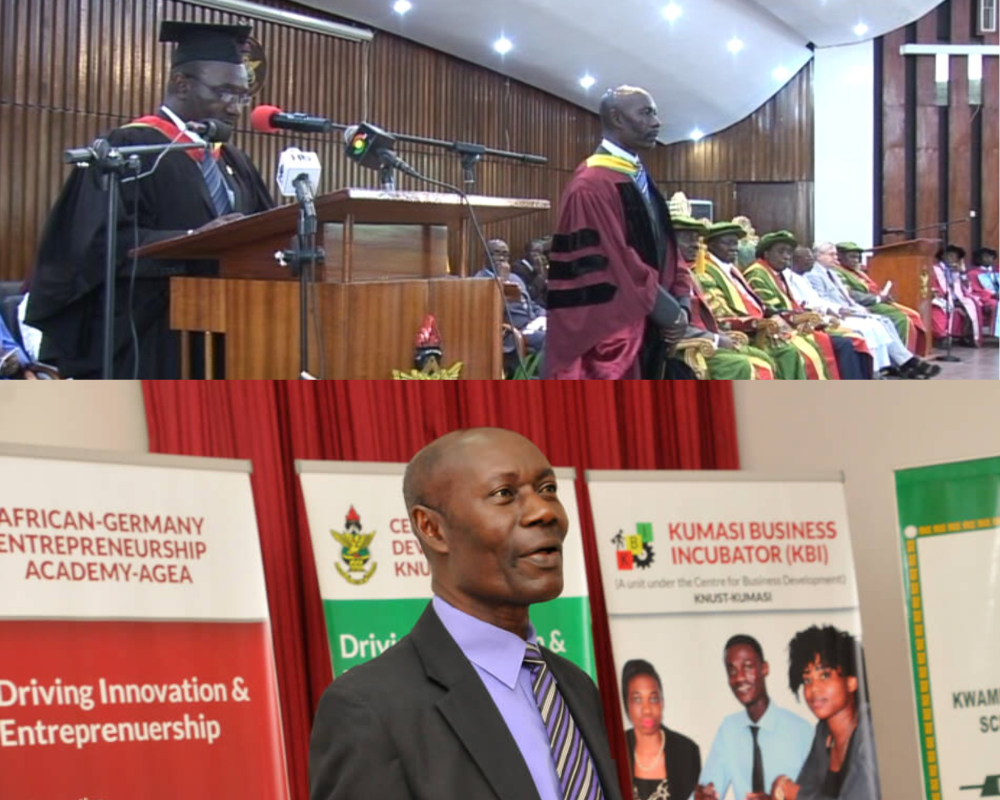
When Professor William Oduro stepped forward at the Great Hall during a Founders’ Day Special Congregation on November 27, 2015, the citation reflected a career that has crossed borders.
“You have served humanity at the local, national and international levels,” read Mr. Benjamin Oduah Andoh, then Acting Registrar, as Prof. Oduro received an award for distinguished service.
The words captured a body of work that links two worlds often treated as separate: the quantitative rigour of global biodiversity science and the lived conservation practices embedded in African tradition.
In Ghana’s forests, sacred groves protected by taboos and ritual observance remain pockets of biodiversity preserved for generations. Thousands of kilometres away, large-scale datasets chart how farming, logging and urban expansion are accelerating species loss.
Bridging these domains is Prof. Oduro, an ecologist at Kwame Nkrumah University of Science and Technology (KNUST), Kumasi whose research has shaped both international models and local policy debates.
Prof. Oduro is among the contributors to the PREDICTS project, one of the world’s largest biodiversity databases, which aggregates data from thousands of sites across continents to assess how human land use alters species richness and abundance.
Two of his co-authored papers: The PREDICTS database (2014) and The database of the PREDICTS project (2017), have together been cited more than 600 times, becoming foundational references in global ecological modelling.
The findings are stark: as natural habitats are converted for agriculture, infrastructure and settlements, biodiversity declines sharply. By ensuring African ecosystems are represented in such global analyses, Prof. Oduro’s work has helped correct long-standing data gaps in international conservation science.
Yet his scholarship does not stop at large datasets. Closer to home, his 2007 study on traditional natural resource management in Ghana documented how cultural rules, including bans on hunting specific species, seasonal restrictions and the protection of sacred groves have historically conserved ecosystems.
The paper has become a touchstone for African conservationists, arguing that modern environmental policies risk failure if they disregard indigenous knowledge systems.
Beyond academic publishing, Prof. Oduro has served on national and international bodies, including an international team that developed guidelines on trade in elephant products and illegal killing of elephants in Nairobi, Kenya.
He has also contributed to a nationwide inventory of sacred groves, reviewed Ghana’s biodiversity status, and led conservation priority-setting for the Upper Guinean Forest ecosystem.
Taken together, his work echoes a dual mission: to embed African landscapes and data in global biodiversity science, and to affirm local traditions as legitimate, evidence-based tools for conservation.
By: Emmanuel Kwasi Debrah


